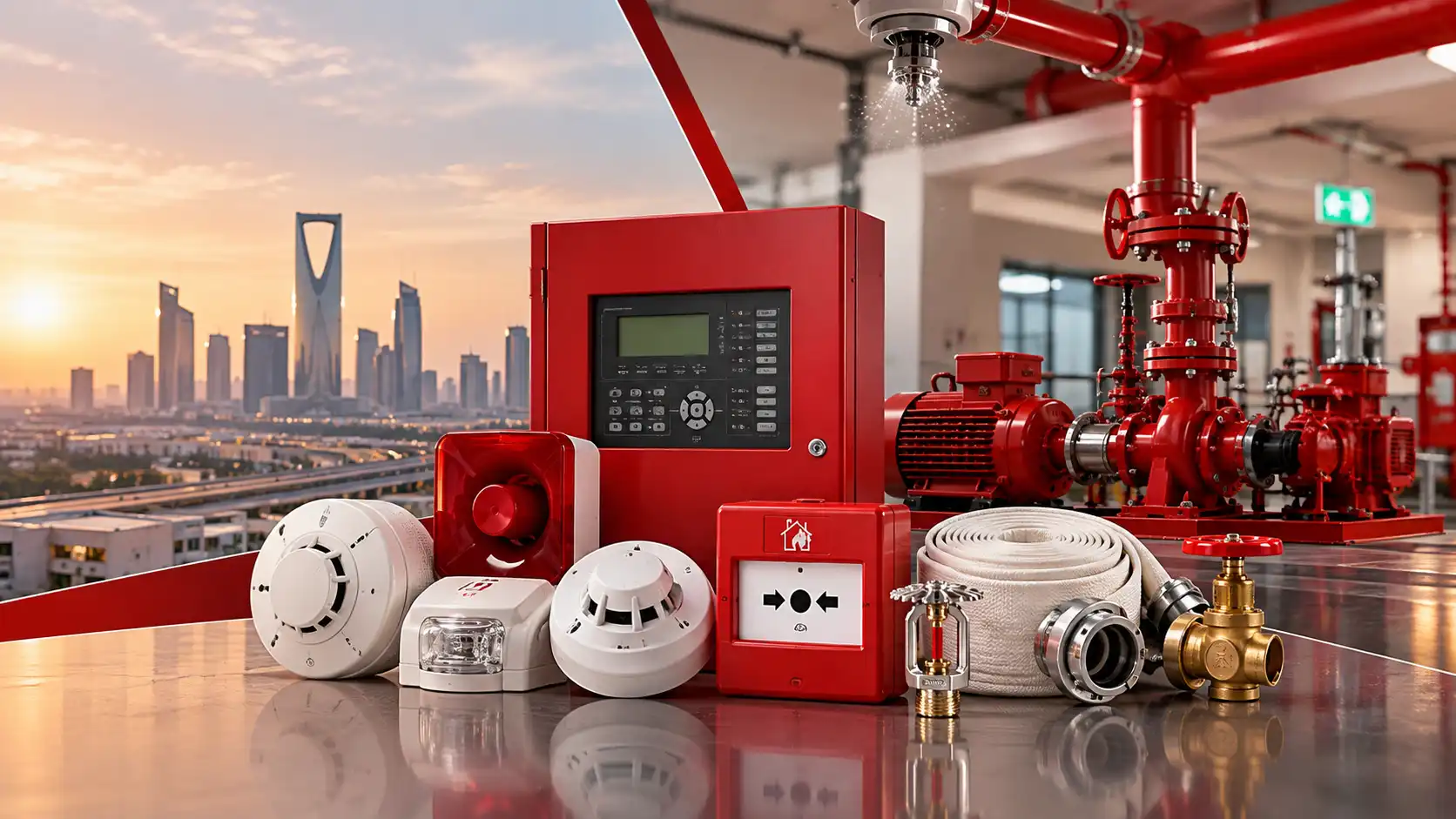
A fire can spread quickly through a factory, hospital, office, or residential building. The right fire safety systems help detect danger early, warn occupants, support evacuation, and reduce damage to people and property.
In Saudi Arabia, businesses in Riyadh, Jeddah, Dammam, Jubail, and other cities need fire protection solutions suited to their building type and operations.
At EMAN Future Trading Company (EMAN FTC), we provide fire alarm systems, fire-fighting solutions, testing, commissioning, and maintenance services for commercial and industrial projects.
What Are Fire Safety Systems?
Fire safety systems are equipment and protective measures designed to detect fires, alert people, support evacuation, and control fire hazards.
A complete fire protection strategy may include:
- Fire alarm systems: Smoke detectors, heat detectors, control panels, sounders, and manual call points.
- Fire sprinkler systems: Automatic water-based protection for suitable buildings and hazards.
- Fire suppression systems: Specialized solutions for particular risks, including certain equipment rooms and industrial processes.
- Fire pumps and hose systems: Equipment supporting water-based fire protection.
- Emergency lighting and exits: Systems that help occupants find safe evacuation routes.
- Passive fire protection: Fire-rated walls, doors, and compartmentation that help limit fire spread.
These measures work together, but not every building requires the same combination.
Types of Fire Safety Systems Used in Saudi Arabia
Fire Alarm and Detection Systems
Fire alarm systems identify possible fire conditions and warn occupants. Common components include smoke detectors, heat detectors, flame detectors, alarm control panels, and notification devices.
For example, an office building may use smoke detection and addressable fire alarms to help staff identify the location of an activated device.
Explore EMAN FTC's fire alarm equipment, including detection and control components.
Fire Fighting and Suppression Systems
Fire-fighting systems help control or extinguish fires. Depending on the hazard and approved design, they may include sprinklers, fire pumps, foam systems, or specialized suppression equipment.
For example, a warehouse storing combustible packaging materials may require a different protection strategy from an electrical equipment room.
Learn more about our fire-fighting system services.
Fire Safety Systems for Hospitals, Factories, Offices and Apartments
Every building has different fire risks. Here are some practical examples:
| Building type | Important fire safety considerations |
|---|---|
| Hospitals | Patient safety, reliable alarms, emergency coordination, and evacuation planning |
| Factories | Machinery hazards, electrical equipment, industrial detection, and appropriate suppression |
| Offices | Early detection, occupant notification, escape routes, and system maintenance |
| Apartments | Residential alarms, protected common areas, evacuation arrangements, and building-specific protection |
| Warehouses | Storage materials, ceiling height, rack arrangements, and suitable detection and suppression |
| Shops and restaurants | Electrical hazards, cooking risks, alarms, extinguishing equipment, and safe exits |
Example: A hospital with operating rooms and patient wards cannot use the same fire safety approach as a small retail shop. Its protection strategy must consider the needs of patients, medical equipment, staff, and continuous operations.
Similarly, factories in Jubail or Dammam may need specialized detection for environments affected by dust, heat, or industrial processes.
The final system must be selected through an appropriate fire risk assessment and approved engineering design.
Conventional vs Addressable Fire Alarm Systems
Two common fire alarm technologies are conventional and addressable systems.
Conventional fire alarm systems identify alarm conditions by zone. They may suit certain simpler installations when permitted by the approved design.
Addressable fire alarm systems can identify individual devices, making it easier to locate alarms and troubleshoot faults in more complex buildings.
For example, in a multi-floor commercial building, an addressable system can indicate which configured detector activated, rather than showing only the affected zone.
The choice depends on the building, system requirements, compatibility, and approved design—not simply the initial price.
Fire Safety System Requirements in Saudi Arabia
Fire safety systems in Saudi Arabia must be designed and installed according to applicable building and fire protection requirements.
The Saudi Fire Protection Code (SBC 801), relevant Saudi Civil Defense requirements, and applicable technical standards are important references when planning a project.
Before installing or upgrading a system, building owners and contractors should verify:
- Applicable code and approval requirements
- Building occupancy and fire risk classification
- Approved fire protection drawings
- Equipment specifications and supporting documentation
- Required inspections, testing, and commissioning
- Qualifications and accreditation of relevant service providers
For example, a new industrial warehouse in Riyadh should not select its fire alarm and sprinkler systems based only on quotations. The building layout, stored materials, fire hazards, and approved design must be reviewed first.
Official guidance is available from the Saudi Building Code and Saudi Civil Defense.
Fire Safety Systems in Riyadh, Jeddah, Dammam and Jubail
Fire protection requirements depend on the facility and environment, not just the city.
Riyadh: Commercial buildings, hospitals, offices, factories, and residential developments require fire protection appropriate to their occupancy and approved plans.
Jeddah: Hotels, warehouses, industrial facilities, and commercial buildings may need equipment selected with coastal environmental conditions in mind.
Dammam: Manufacturing businesses and industrial maintenance teams often need reliable detection, fire alarm testing, and maintenance.
Jubail: Industrial plants, production facilities, and equipment rooms may require specialized hazard assessments and integrated fire protection systems.
For projects in Al Khobar, Yanbu, Makkah, Madinah, and other Saudi locations, EMAN FTC can review enquiries based on the project scope and service availability.
Fire Safety System Installation and Maintenance
Even properly selected equipment needs correct installation and regular maintenance.
A typical project involves site assessment, engineering design, equipment selection, installation, testing, commissioning, and documentation.
Over time, fire alarm systems may develop detector faults, wiring problems, battery issues, or communication errors.
For example, a fire alarm panel showing a persistent trouble signal should be inspected by a qualified technician. Simply resetting the panel without identifying the cause may leave a safety problem unresolved.
EMAN FTC provides fire alarm installation, troubleshooting, testing, and maintenance services.
How to Choose a Fire Safety Systems Company
Before selecting a supplier or contractor in Saudi Arabia, ask a few practical questions:
- Does the company have relevant experience with your building type?
- Can it provide the qualifications and approvals required for the work?
- Are the proposed products compatible with the approved design?
- Does the quotation include installation, testing, commissioning, and documentation where required?
- Are warranty and maintenance responsibilities clearly explained?
A cheaper quotation may exclude essential work. Always compare the full technical scope before making a decision.
Why Consider EMAN FTC for Fire Safety Systems?
EMAN Future Trading Company (EMAN FTC) is based in Riyadh and offers fire alarm and fire-fighting products and technical services for Saudi industrial and commercial projects.
Our listed services include fire alarm installation, testing, commissioning, troubleshooting, maintenance, and system modification. We also provide fire-fighting services, including fire pump testing and selected suppression solutions.
Whether you're planning a new installation or upgrading an existing system, sharing your building information and technical requirements helps us review your enquiry.
Frequently Asked Questions
What are the main types of fire safety systems?
The main types include fire detection and alarm systems, sprinklers, fire suppression systems, emergency lighting, and passive fire protection. The appropriate combination depends on the building and its risks.
What fire safety systems are required for commercial buildings in Saudi Arabia?
Requirements depend on the building's occupancy, size, height, hazards, and applicable Saudi regulations. A qualified fire protection professional should review the project against its approved design and relevant requirements.
What is the difference between fire alarm and fire-fighting systems?
Fire alarm systems detect potential fires and warn occupants. Fire-fighting systems help control or extinguish fires using water or other suitable suppression methods.
Can existing fire alarm systems be upgraded?
Yes, many systems can be modified or expanded. However, the existing panel, wiring, device compatibility, capacity, and applicable approval requirements must be checked first.
Request Fire Safety System Solutions from EMAN FTC
Planning fire protection for a hospital, factory, office, warehouse, apartment building, or commercial project?
EMAN FTC can review your fire alarm and fire-fighting requirements for projects in Saudi Arabia, subject to the required scope and availability.
Share your building type, project location, technical drawings, and system requirements to discuss a suitable solution.
Phone / WhatsApp: +966 58 339 5756
Email: info@emanftc.com
Website: https://emanftc.com/